Any long-distance-capable wired networking will have electrical isolation requirements, so that connecting systems that have different ground voltages won't melt anything (this can apparently be a serious concern if you're networking outside a single building).
So, the worst it should do is fry the network-facing side of the isolation part, and b0rk your network card.
...it looks like ethernet in particular mandates magnetic (rather than optical) isolation. So there's at least a possible mechanism for feeding too much AC power across the isolator, even if I'd expect the losses from trying to stuff such a low frequency (60 Hz) thru a component designed for MHz to make it rather harmless.
I'd guess that feeding in much higher frequency power (say, around 1 MHz) would be much more likely to do interesting things than would the near-DC coming out of the wall.
So the part that's likely to get fried by excessive current is the isolating transformer, if mains is applied across either of the RX/TX pairs. If it's applied between one RX and one TX, then unless the insulation breaks down there is unlikely to be any current flow - and the isolation transformers are rated to 1.5kV as per the spec, so 120V or 240V won't do it. The 2kV cap for the TX ground reference also stops any current from flowing that way.
I wonder if there's market for NICs with fuses or other protective circuitry on the inputs...


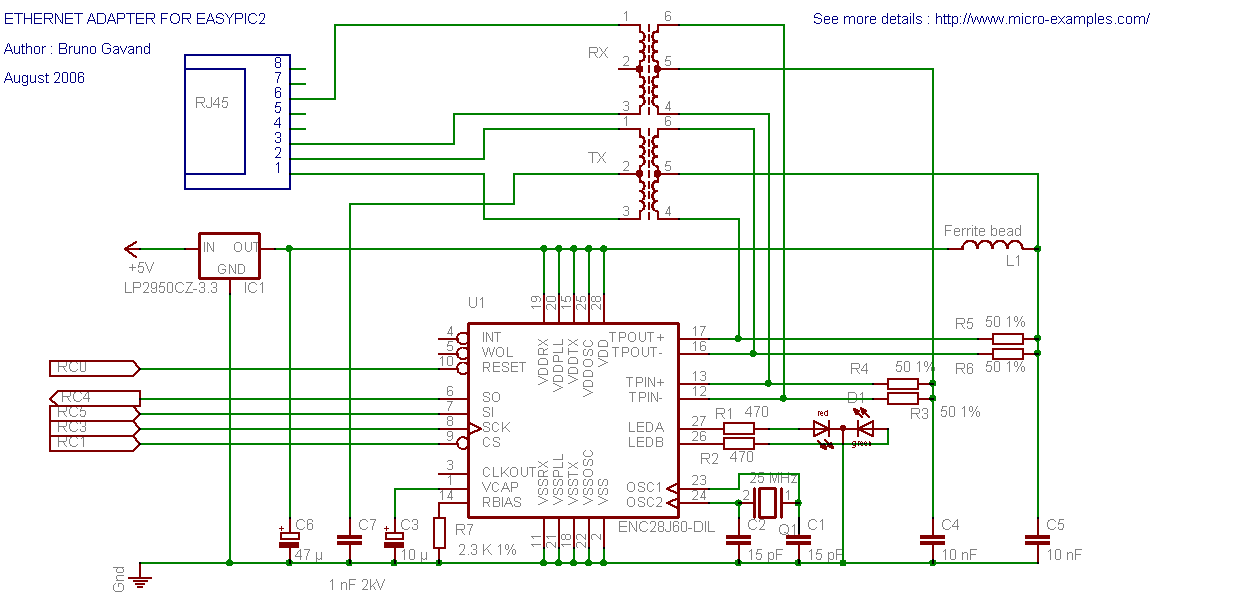
So, the worst it should do is fry the network-facing side of the isolation part, and b0rk your network card.
...it looks like ethernet in particular mandates magnetic (rather than optical) isolation. So there's at least a possible mechanism for feeding too much AC power across the isolator, even if I'd expect the losses from trying to stuff such a low frequency (60 Hz) thru a component designed for MHz to make it rather harmless.
I'd guess that feeding in much higher frequency power (say, around 1 MHz) would be much more likely to do interesting things than would the near-DC coming out of the wall.