It's not possible to design a tracking device which isn't at least somewhat dual-use.
It seems relevant that the most shocking story they could put together was about someone who found the AirTag and got a protection order against their stalker.
That is, in fact, how it's supposed to work. If you have an iPhone, you can find it quite exactly by playing 'hot cold', that being one of the main intended uses, emerging your keys from couch cushions.
If you don't, you do have to install an app. I guess the alternative to that is for Google to build this in?
More than evidence that stalkers will use AirTags, this article demonstrates that it's a good way to get caught red-handed stalking someone, with tangible physical evidence that a court will respect and understand.
If I were out there offering advice to stalkers, I'd tell them to use an AirTag, because: fuck stalkers, they deserve to get caught. You'd be sickened how many times these people can jump out of the bushes at their prey before the police pay attention.
> It seems relevant that the most shocking story they could put together was about someone who found the AirTag and got a protection order against their stalker.
The AirTag was used to track someone. A vehicle was used to murder them.
I might agree with the framing if it was more like a person was in witness security, and AirTags were used to discover their location and then execute an assassination.
> The AirTag was used to track someone. A vehicle was used to murder them.
I don't think anyone who clicked the article (besides you perhaps) was expecting the AirTag to be the actual murder weapon.
It's an indisputable fact that the killer used an AirTag to track and follow her victim to his destination and then murder him, I'm not quite sure why you're bringing up WitSec or "framing".
Because the wording makes it seem like the murderer used the AirTag with the motive to murder.
If the girlfriend had used the AirTag to track the boyfriend and found him planning a surprise party for her or something, then the AirTag served the same role, which makes the AirTag superfluous to the murder part of this story.
Edit: another way of putting it is if the girlfriend simply followed the boyfriend’s car, the end result was the same. But an article would not have been written titled “Woman used a vehicle to track boyfriend, then ran over and killed him, police say”
The problem with tailing your boyfriend in your car is that your boyfriend tends to notice you tailing him in your car, since he knows what you and your car look like. Using an AirTag completely negates that.
It's a lot easier to tail someone without being caught when you can wait for them to reach their final destination and just go straight there instead without ever being visible to the victim.
If you're unwilling to even acknowledge that tracking someone via AirTag is much simpler versus physically tailing them around town then we're just wasting time here.
> If you're unwilling to even acknowledge that tracking someone via AirTag is much simpler versus physically tailing them around town then we're just wasting time here.
I specifically acknowledged the AirTag was used to track, and obviously it makes tracking easier. I objected to the notion that an AirTag was involved in the murder, since it was not premeditated.
That is some Olympic-level mental gymnastics to argue that just because other, much more difficult, ways to track someone exist, that a tracking device played no part in making that particular sequence of events (including the crime of murder) easier to commit.
I did not write an AirTag played no part. I wrote that the AirTag was superfluous to the murder, just like using a car to drive to the bar was superfluous to the murder.
Context is important. The point of writing “the car was used to murder someone” was to show that in this story, it was just as nonsensical to claim the AirTag was used to murder someone.
samatman: It seems relevant that the most shocking story they could put together was about someone who found the AirTag and got a protection order against their stalker.
SadTrombone then links to what they think is a more shocking story because the AirTags were presumably part of a plan to murder someone.
Me: points out that SadTrombone’s story is not more shocking because the AirTag was used to track, or stalk, but not as part of a plan to murder someone, as was insinuated.
I think the original story of a stalker stalking an ex is more shocking than someone stalking their girlfriend/boyfriend to verify if they are cheating. Most people would simply break up at this point, but that this girlfriend became enraged enough to cause violence or kill is unrelated to AirTags.
AirTags have a lot of privacy protections. The stalkers were only caught because they were dumb enough to use their own identifiable Apple IDs.
Just creating one with a fake protonmail email will make it quite difficult, though you will also have to purchase an iOS device just for that. Still not unthinkable.
> I guess the alternative to that is for Google to build this in?
Probably better, but still not sufficient. It will probably take years before Android users get this builtin, and not everybody has a smartphone anyway. I don't currently use one.
If you really want to avoid tracking you may also want to avoid having a phone with you too. Both things enter in contradiction.
I guess Pandora's box is already open anyway. AirTags are not the only device with this feature if I understand correctly. There's probably no coming back to a world where there's no risk for you that someone puts such a device to track you. I don't know what is the solution, other than legal.
I guess my computer has Bluetooth/Wifi and could be used to detect such devices when they use Bluetooth since I'm using it for the most part of the day and all my stuff is within the Bluetooth range. But that's because I use a computer everyday.
I still think Apple should not have made this mainstream. If this kind of device already existed, the idea of using them was probably less in the mind of regular people and Apple's product is probably very convenient and possibly affordable enough. Obviously, I understand why this kind of thing is useful for people who keep losing their stuff, I'm one of them. Still, I'm not sure it was worth it.
Apple’s turning on Find My Phone by default arguably did more to normalize tracking than anything else. Tile (and other niche products) were largely seen as nerdy and an extravagance at best, but AirTags were seen by the public as a logical extension of Find My Phone.
Yes. You can simultaneously correctly say that other trackers (and ways to track someone) existed before AirTags and that most tools can be used for both good and bad
and...
Also say that AirTags almost certainly made tracking more mainstream and on more people's radar.
>Probably better, but still not sufficient. It will probably take years before Android users get this builtin, and not everybody has a smartphone anyway. I don't currently use one.
Not if Google integrates BLE tracker detection into Play Services, which can be updated independently of the OS and without OEM or carrier intervention.
> Probably better, but still not sufficient. It will probably take years before Android users get this builtin, and not everybody has a smartphone anyway. I don't currently use one.
I doubt they ever will, but Google could roll this out very quickly by making it part of Google Play Services.
There's so many battery powered GPS trackers (with even longer battery life) and these don't have any "reporting" mechanism. I don't really understand the criticism against AirTags. Just because they are affordable, or because Apple drama brings many clicks?
Read the article and you'll notice that the AirTag gave the stalker plausible deniability. You don't accidentally lose a GPS-tracker — find one of these in your car and you'll know someone is stalking/tracking you — but for an AirTag (or similar product) it's much easier to claim that the stalker uses them for their own possessions, and that they simply lost that one. The stalker in the article (partly) got away with that excuse: he claimed to have just lost the AirTag when he put the child seat back in the car of his ex with whom he has shared custody.
Why does it matter about covering your purchasing tracks? I presume most stalkers believe their targets won’t find the device. If it was found, how are you going to easily know what it is and then identify the owner?
AirTags don’t let you cover any tracks at all. A GPS tracker is easy to buy, without any nefarious connections.
As per the article, a good lawyer can raise sufficient reasonable doubt about Airtags to acquit their client. You may have bought five and "accidentally" lost one. However, it is harder to claim plausible deniability when you purchase a GPS tracker. Of course you can buy GPS trackers everywhere, however, you will leave an evidence trail that is easy for the police to find. Most GPS trackers on Amazon are also much larger in size and more difficult to conceal.
Yes the less specialized something is the harder it is to prove what the intended use case was.
I know guns kill way more people each year than baseball bats, but there were a few people killed with baseball bats last year. It's way easier to buy a baseball bat without leaving evidence, plus it's much easier to claim plausible deniability if you get caught with one, so let's regulate baseball bats.
Most likely this. There was a lot of controversy over a Foxconn factory a few years back, which assembled products for pretty much all big electronics companies. Most of the articles had "iPhone factory" in the headline.
More that, imho, revealed a problem. People were stalking with Tile's before Apple came around. you just had no way to know that unless you happened to notice that your device happened to make a consistent Bluetooth connection (and you were setup with Tile in the first place).
Most battery powered trackers have a battery life of about a week. AirTags last a year. That's possible because they're pretty much passive and Apple's network of iPhones does the actual tracking. No other company can do this.
At least in the US, you're mistake if these are the same problem. The amount of people who have tile software install in the US are nowhere near the amount of iphones out and about (over 50% of phone users).
This isn’t fair, but AirTags are superior (and more of a tracking threat) because the number of iPhones dwarfs the number of phones Tile is installed on.
As a user of tile, I never ran into a problem with not knowing (after 20-30 minutes) where the device was. Simply that it took a while for someone with the tile app installed to randomly wander into range.
I don't understand, you say the reporting mechanism mitigates all the issues?
Airtags are convenient, user friendly. So they are widely used even if there might be technically better alternatives. They would not work as well without half of the planet having iphones. So criticizing Apple is fair.
I’m the CEO of Life360 which owns Tile. We are exploring a program that would disable anti-stalking features if we could verify someone’s identity to then enable our devices to be used to protect against theft, which is not possible with AirTags (a thief can just scan for your tags).
Our belief is that by adding more friction and increasing the risk of punishment we can make these devices far more powerful for the 99.999% of users who are responsible. We don’t want outliers to ruin it for everyone.
If a stalker wants to track someone there are inexpensive stealth GPS devices with their own cell connections that allow real-time location - we make them too - but for whatever reason there hasn’t been any negative attention on this side of the location device category.
Are there any thoughts or implementation suggestions on this?
How on earth do you read this article, and then come to the conclusion that the answer is to disable anti-stalking mechanisms (which apple, due to using the UWB and their own protocol has vastly better ones) then your own product?
This is the necessary trade off. Long time user of Tiles, and then later airtags - I travel a lot, and I have a tendency to leave my bags, so for me they save me a lot of money. My dog wears one. My kids and wife are bugged constantly with alerts that a unknown device is with them (with my name on it), but that's acceptable because somewhere a jealous ex-partner is using this for ill, or someone is trying to isolate someone for a crime.
This is the perception problem. Apple introducing anti-stalker controls with the Airtag's didn't introduce a new problem - it revealed one that was already there.
Because theft protection is an extremely compelling use case of trackers. Unfortunately, features that make a compelling anti-theft device (concealability, secrecy) are diametrically opposed to features that make it hard to abuse for stalking purposes.
It would be a killer app to somehow have the best of both worlds. I agree that robust authentication is one way to go about this. Perhaps a tracker could have a “stolen” mode, that when enabled disables anti-stalking features but also automatically notifies the police with the identity of the tracker’s owner.
Yes.
I’ve done this before, with a bicycle specifically. Found a stolen bike, and chased the thief until the cops took over. They showed up FAST, multiple units with lights and sirens. They treat it as an active crime if you know where the goods are rather than an investigation.
Calling the police would be more to deter stalking than to help with theft recovery. Knowing that the police will automatically be notified if the tracker gets set to stealth mode would be enough to deter many stalkers.
>Are you going to track down and confront the thieves who stole your bike?
I wouldn’t confront thieves but I certainly would track down where the bike gets ridden and take it back when it’s somewhere (semi) public. Years ago, a friend’s bike got stolen and by sheer luck we saw it a couple weeks later locked to a bike rack. We got some bolt cutters and took it.
Pro tip: the cops will help you if you call them and say “hey, I’m outside (address) and I can see my stolen bike, I’m going to go retrieve my property, let me know if you want to help. Also I’m armed.”
This is terrible advice - and it is also incorrect.
Police will respond, most assuredly, if you declare this intention, but you will be at best a complicating factor and at worst an additional deadly threat.
Finally, if it was all a ruse you could find yourself in serious legal jeopardy if any violent - or deadly - outcomes ensue.
In free states, it’s common and not a big deal to tell dispatchers & police that you’re armed. Usually the cops will just ask where your weapon is, then say “cool, don’t shoot me and I won’t shoot you”. Not a big deal. They’re generally not concerned about people who voluntarily surrender their element of surprise.
Yep. Call the police and tell them you're about to create a potentially deadly situation over some property you claim to own. What could possibly go wrong?
There are people who have "stuff" that's not always with them, stored elsewhere, used infrequently, etc. I've got AirTags on these things just so I have something that can easily identify where they've been moved if they happen to be.
So, yes - I'd use the tags location to track the item because the items wouldn't be easy to hide. And as others have said if you've located your stolen property the police will respond during an active situation.
I use AirTags and my main phone is not Apple. So if Tile comes out with a more targeted approach for this "stuff" of mine I'd be willing to drop AirTags because of the annoying beeping when "lost" and other issues the walled garden creates.
Knowing exactly where something is seems like the only thing that will make the police do anything more than take a couple of prints for minor theft (at least around here).
As someone who owns half a dozen Tiles, one of the reasons Tile had its lunch eaten by AirTags is the persistent disconnect between Tile management and their audience. You created a product that appeals most to techies and hackers and then buried it in anti-consumer nonsense. Normies can't tell the difference, but we notice when you charge for things that don't cost you any money to provide. Before AirTags I used to give a lot of Tiles as Christmas and birthday gifts. I don't know a single person who saw you trying to charge three dollars a month for the app to notify you of loss of signal and didn't go "Oh my God, go fuck yourself".
This is painful, but it is worth considering that "outliers" so far have meant 1 person dead from an AirTag, as well as a few dozen stalking incidents.
I believe anti-stalking features should be added, but there needs to be balance and also perspective on the safety of things. It's easy to focus on those people who were injured, forgetting the perspective that in general, these trackers are very safe.
- How many people are killed from cars every year? Drunk driving?
- 1,000 children are injured in California alone every year from pencils. Some have died. As I've said elsewhere, you are more likely to die from a pencil than a shark.
- Over 1 million people land in the Emergency Room every year for a stair-related accident. Over 12,000 die.
- 12 people die from taking selfies every year.
- 450 people die from falling out of bed every year.
- 150 people die every year from having a coconut fall on their head.
- 7,000 people die every year from a doctor's sloppy handwriting on the prescription.
- 2,500 left-handed people die every year from using right-handed tools.
- 29 people die every year from being buried alive by accident.
All of these are things we don't consider dangerous, and would often happily give our children or teenagers. Thus, while anti-stalking features of a kind should be added (an alarm if left alone too long?), we shouldn't dwell on too few people. Many of these issues kill far, far more people and we just can't avoid it - we can't force people to not take selfies, or doctors to always have perfect handwriting, or open every grave every day following for a week. Attempting to mitigate every weird cause of death is not possible and would require totalitarianism.
If someone is tracking you on a tile there is zero protection - android or iphone that someone has unless they installed the scan and search app, which was only available in march this year - _years_ after the product was introduced.
I don’t see how your solution really fixes anything as the device would still have to be found for there to be any consequences. It seems like it might help with the blatant attempts described in the article where an AirTag was slipped into someone’s pocket, but I would probably never find a well hidden device glued to my car. I hope you do find a good solution though because I don’t want to pay a monthly subscription for a gps tracker for theft protection on my motorcycle. It would be nice to just be able to drop in a tile or AirTag and forget about it until I needed jt
It’s a poorly-conceived first thought. How does having the source code protect someone against a tracking bug hidden underneath their car? Is a stalking victim supposed to upload a modified firmware to a computer they don’t have physical access to, and might not even know exists? Or do you figure that giving more power to the person deploying the computer, the perpetrator, is somehow going to help the people they victimize?
I suspect you're over indexing on what what a person being stalked would do with code. The source code is a tool, and it can become clear to people outside of the corporate interests what the security model or lack thereof is.
I'm curious whether you think there is any benefit for tracking technology to be proprietary.
What makes AirTags different from other tracking devices:
1) AirTags take advantage of Apple's global "Find My" network of hundreds of millions of Apple iPhones. No other tracking device has this capability.
2) AirTags are mass produced and mass marketed by the world's largest corporation, whose every move is followed by the news media. No other tracking device has this capability either.
3) Battery life is excellent, more than a year.
AirTags are inexpensive, easy to use, powerful, and pervasive, all due to Apple. For most consumer devices, these would be things to celebrate, but not in this particular case. Apple has "revolutionized" stalking.
> AirTags take advantage of Apple's global "Find My" network of hundreds of millions of Apple iPhones. No other tracking device has this capability.
I guarantee I can find a cheaper device that does not need to use apples network and is as easy to use; it's even more perfect for stalking because there's no information on the owner and no risk that the tag notifies the person nearby.
Apples devices are low power and do not have GPS trackers in them; it's pretty trivial to have a higher powered device with a GPS tracker in it.
> I guarantee I can find a cheaper device that does not need to use apples network and is as easy to use; it's even more perfect for stalking because there's no information on the owner and no risk that the tag notifies the person nearby.
You missed the point about why Apple's network is a big deal.
I have a few Tile brand trackers, they're functionally the same basic thing as an Airtag and have been around for years. Most places that sell electronics stock them.
The trick is that if you lose something or have something stolen, it can only be detected if it comes near another Tile user who has the app installed and has given it appropriate permissions on their device to be able to scan. This obviously doesn't matter if you're just trying to find a set of keys around the house, but if your bike is stolen unless you're in a major city you're probably SOL. 10 times as many people have installed Apple Music on an Android device as have the Tile app, so that's not much.
Apple's massive advantage is that every single iPhone, iPad, etc. is by default a receiver for their tracking network. That same stolen bike is now trackable by something like half of all the smartphones in the world. If it's in a place where there are meaningful amounts of people it's going to show up on the tracking network.
Basically Apple's tracking network is the first time a low power solution like this has truly had critical mass.
> Apples devices are low power and do not have GPS trackers in them; it's pretty trivial to have a higher powered device with a GPS tracker in it.
GPS takes a hilarious amount of battery power and requires a significantly larger antenna. Beyond that you then also need a cellular service plan and the device has to remain in range of those towers. The device you linked has battery life of less than a week in an active tracking mode and in "battery save" mode can only provide a few updates a day. It'd be fine for a full size vehicle or piece of industrial equipment, but not a bike or a laptop bag.
Note that the product you linked to is larger, much more expensive (it requires a $20-per-month monthly subscription), and has much shorter battery life
Higher power is a major limitation though: "Rechargeable battery life is up to 5 days (the more it moves the lesser the days)" Whereas AirTags have a year battery life.
Also: "Works with GPS satellites when outdoors as primary tracking technology and when indoors Wi-Fi as a secondary backup tracking."
Given someone's name and rough location, I can probably find out lots of things about them. It might take a few bucks to find their home address but probably not very hard.
If you look at it overall though, AirTags have a huge number of legitimate uses, and honestly I think Apple have done enough to combat stalking (to the point where it makes AirTags potentially significantly less useful for anti-theft purposes than they could be).
If anything, it might end up better in some cases, since they’re quite detectable and linked to the owner’s Apple accounts, it will potentially lead to victims discovering they’re being tracked faster and police tracking down the perpetrator sooner than they might have, had the perpetrator used other easily available tracking methods…
AirTags have so much anti stalking it’s annoying (when you share things like car keys in a family). I’m constantly reminded about how my wife has planted car keys on me or how I left them behind if she leaves with them.
If I wanted to stalk someone I’d get any gps tracker that doesn’t constantly remind whoever is carrying them that they are being stalked…
I can’t see how AirTags revolutionized anything in this space. So long as they are less useful for stalking than similar devices.
Apple is super popular in the US, but in the rest of the world, and especially in non western countries, Google (Android) and Samsung have a much larger network...
Unfortunately, as with many devices, Airtags can be used for bad as well as good.
I own a number of them and have attached them to things that are valuable to me, and not just financially. The car is the prime example, but I've also attached one to my dog's harness. He's a rescue Fox Terrier with a prey drive like a missile and no recall skills whatsoever (yet): if he slips his lead somehow we have at least some slight chance of finding where he's run off to. Likewise my waist-mounted hiking bags - if I lose the one that holds my keys or first-aid kit on a long walk I could be in big trouble when I get to my destination. Sadly, the Guardian doesn't mention the positive aspects...
The criticism is essentially that AirTags are a better tracker for many use cases than existed previously. So I'm not sure what the request here is. Put in mitigations? Well, that's pretty much been done. Decide that this technology is too dangerous to exist? Good luck with that--especially given the positive uses.
Some of the comments in this thread point to violent stories beginning with these types of trackers. I don’t think we’ll hear about comparatively dramatic happy endings facilitated by quick geolocation. Your examples. Thwarted child abductions, via a tracker in a car seat. Critical medicine shipments. I’d argue these are a boon for ordinary people. And ordinary people with some geolocation info who need help from the authorities. And prosecutors following the owner of a discovered tracker.
I’m sorry to be blunt, but unless you have specific reasons to be concerned about custodial kidnapping, “foil baby snatchers by putting an AirTag in your car seat” is nonsense.
So is using this form of consumer tech for shipment tracking, for that matter. More robust trackers have long been in widespread use by the shipping industry.
Maybe people arrive at specific reasons before they decide to use an airtag? “Unless you have specific reasons” is only reassuring the kinds of people who don’t.
The scenario in which an AirTag in a car seat would help prevent a child abduction is extremely specific: the child would have to already be in the car seat and not subsequently moved therefrom, and one or more of the kidnappers would need to have their iPhones on (since the tag uses the network connections of nearby iDevices), in service range, and either not trigger or ignore anti-stalking alerts. I can kinda see how those requirements might fit a custodial kidnapping, but only if the partner didn’t know about the tags. Stranger kidnappings (which are very rare anyway) would likely not.
A GPS tracker with a cell connection would serve you much better in either scenario. Those are less popular with criminals because they can often be traced back to the purchaser, but they are more reliable and won’t accidentally alert the kidnappers because they tripped an anti-stalking monitor.
Like with the most of technology, uncomfortably. I survived before phones, mobile and the Internet. I survived without AC, Car and so many similar things, personally. Now I prefer them and get real benefit from them.
At least United has a tracking app that seems to work pretty well these days. But, yes, not that I check luggage a lot but I do throw an AirTag into checked luggage and it seems to do a good job of telling you if your luggage has made the plane/connection.
I'm not concerned about them lying so much as the bag just not being scanned for some reason. I'm not really that concerned about their computer lying to me (in the sense of providing information it knows to be wrong).
1. If the airline had kept track of your bag properly, it wouldn't have got lost in the first place (At least for a literal enough definition of 'lost') so the moment I land without my luggage, their data is already suspect.
2. The airline might not expose its data to you - or might only do so after waiting in a phone queue for 30 minutes, or only in a very low-resolution form.
re: 2 United's app does give you the information directly although obviously their information could be wrong for some reason. In any case, an independent source of information is always good because if the two sources agree, you can be pretty sure of where the bag is actually located.
It’s impossible to design a wireless tracker that both can a) be used to surreptitiously track and recover stolen items and b) not be abusable by stalkers.
It’s probably a good thing that Apple is sacrificing a) for b), but it does suck that I can no longer hide an AirTag on my bike and have a robust way of tracking it if it gets stolen, since a thief will now be promptly alerted that there is a hidden tracking device on board the bike.
The latest vanmoof bikes have one built in. Thief will not be able to get it out without breaking the electronics of the bike, rendering it into a very heavy no-fun to use ebike without motor/smart features.
I LOVE how this prevents my bike from being stolen.
Probably right. But don’t underestimate the power of stupidity. Look at how many criminals think they can stick up a bank and get away with it. Stalkers by profile aren’t the stablest people, so this is another item in their arsenal for “conquering” their target.
Airtags are a tool, and like most tools they can be used in ways that they're not supposed to be used. That doesn't make the tool a bad thing. In most of these cases the stalker could have used something else - a smartphone running an app, a Raspberry Pi running on a battery, something specifically designed for tracking someone - to achieve the same result.
The fact Apple makes it hard to get advice if you find one and suspect it's being used in a nefarious way is a problem which would be trivial for Apple to resolve though. They really ought to support users far more than they do.
Was reading about Apple's "Find My" network. This caught my eye:
"The traffic sent to Apple by finder devices contains no authentication information in the contents or headers."
This allows anyone to write a program and act as a finder device. You can report whatever location you want of the "found" device. Send your stalker to the location of your choice :)
> In addition to making sure that location information and other data are fully encrypted, participants’ identities remain private from each other and from Apple.
I don't know that it matters whether or not there's any authentication information. If you could get your Apple device to misreport its location (would need jailbreaking for iOS probably)[1], maybe you could fool the Find My network into reporting the AirTag is elsewhere.
[1]: This would likely need to be quite involved, considering location may be determined from a combination of IP, Bluetooth, WiFi, GPS, etc., although I'd be surprised if there aren't already tools available to do that, especially on macOS.
"How the pencil, landed in the chest, can kill you"
We could go on. Every tool has uses and abuses, sometimes extreme. Also, this has been around forever. If I wanted to track someone, I could get a battery-powered GPS tracker with 4G LTE and stick it to their car, or buy a Tile. AirTag attempts to notify people which makes it perhaps among the most least-desirable options. Heck, if I really wanted to track someone I'd just hire a Private Investigator.
Edit: And for those saying, one person was killed by an AirTag, look up how many children have been injured in schools from pencils (more than 1,000 per year in California). I'm not calling for banning pencils. You are more likely to die from a pencil than a shark. Likewise, I'm not calling for banning AirTags.
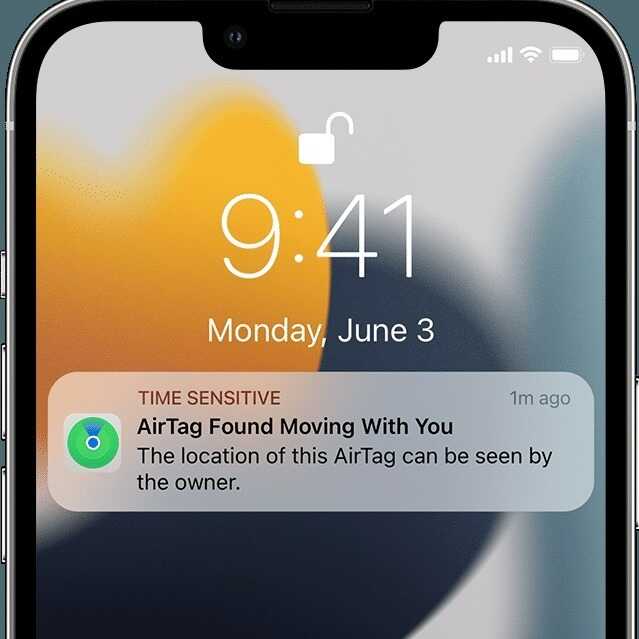
> Apple has stressed that the company takes the issue of stalking very seriously, which is why it designed the alert system that appears on your iPhone if an AirTag not registered to you is seen moving with you over time
So if you don't use iPhone then you wouldnt know if you are being tracked?
They start beeping once moved if they've been separated from their owner for a time (8-24 hours), Apple also makes an app for Android[1] that will let you find nearby AirTags (and has a procedure via reporting the device to the police to unmask the owner)
It's still not ideal (and I'm not conviced small cheap standalone trackers are worth the risks compared to Find My built in to devices), but Apple do provide a lot more tools to protect people than other tracking device companies... and as a result an AirTag is a way worse choice within this category for stalkers from risk of getting caught.
At the risk of sounding like I'm defending a product I don't particularly like,
of course somebody can tamper with the electronics, but even without the speaker alert, an iOS device will warn about an AirTag moving with you, and the Android app can still find nearby tags (and I'm sure someone has built and released an Android app that can scan in the background too - Find My is just using standard BLE after all).
Once discovered & the police are involved the tag can be linked back to the owner with a nice paper trail that can be presented in court... so it's still a worse device for a stalker to use.
They'd be much better served using a cheap GPS tracker[1] with a disposable SIM card... there are heaps of them available. You can buy both domestically and internationally from aliexpress, and they're cheap.
I am a car enthusiast, particularly Volkswagen Golfs. And in local VW Facebook Group covering Ontario (that has ~60,000 members), posts about finding rogue Apple Airtags hidden in people's cars show up easily once every two weeks.
I have an AirTag for my dog, it's placed in his harness. My friend looks after him quite often. After a while of getting the alerts it seems it told her she could disable the AirTag. However, I'm pretty sure she did that and all it did was disabled reporting via her iPhone and it works with any iPhone so the disabling part didn't work.
Existed forever. Battery-powered GPS trackers, Tile trackers, Private Investigators, buying cell-phone location data, there are plenty of options, and none of those options even bother trying to notify the person being tracked. Sure, AirTag makes it easier... if you trust that nobody with an iPhone comes near it who might be alerted, and the person is an idiot who didn't have plenty of tracking options already available that are superior.
Did I mention hammers have been used to smash brains in? And we allow our teenagers to use them!
None of the options you listed offers same autonomous life, cheap price, invasiveness, ubiquitous detection network, and, on top of that, plausible deniability in case you are caught. "Oh that's where my keys ended up! Thanks you, officer!"
Also, I admire your audacity in denying reality, dismissing the dangers of technology as negligible right under that article that reports on its malicious use.
I don't disagree with that it can be dangerous, I disagree on the level of danger.
Someone died - yes. Also, 1,000 children are injured in California alone from pencils yearly. You are more likely yourself to die from a pencil than a shark. We're not banning pencils despite children having died from them. I need not go into cars, or how knitting yarn is a strangulation tool, or hammers a murder weapon. Not to mention the incredibly deadly thing called stairs (12,000 deaths yearly, over 1 million ER injuries yearly).
We as a society have decided hammers, pencils, stairs, and so forth are safe enough, even for children. Same for AirTags.
Do the anti-stalking features of AirTags also apply to iPhones? E.g., will your iPhone alert you if an unknown iPhone is following you like it will if an unknown AirTag is following you?
Can somebody explain how the stalking actually works? As I understand, the wireless technology is short-range? How does the stalker know where the tag is if they're not next to it?
You know how in modern iPhones they don't let you disable bluetooth from the pull-down menu anymore? Instead it just says "disconnecting devices until tomorrow". That's because Apple really doesn't want you to ever turn bluetooth off. And that is because all iPhones are part of their location botnet. So if you ever pass by someone else's airtag, your phone will send a message to Apple that it has seen that airtag at your current coordinates.
But the current bluetooth and wi-fi buttons don't turn them off at all. They just disconnect your devices while still broadcasting. They're still using power, updating airtag locations, and serving as a beacon that physical retailers use to identify you and track how you move through the store.
iPhones (and by that I mean any iPhone, not just the owners) pick up the signal from the tag and send its location to cloud.
So basically iPhones are now pretty much the biggest surveillance network in the world, constantly reporting on location of tags (and other iPhones) to Apple servers.
For others' benefit, Vernor Vinge's A Deepness in the Sky depicts a human interstellar civilization thousands of years in the future, in which superluminal travel is impossible (for the humans), so travelers use hibernation to pass the decades while their ships travel between star systems. Merchants often revisit systems after a century or two, so see great changes in each visit.
The merchants repeatedly find that once smart dust (tiny swarms of nanomachines) are developed, governments inevitably use them for ubiquitous surveillance, which inevitably causes societal collapse. <https://blog.regehr.org/archives/255>
That is an incredibly bad faith interpretation of what’s going on. I don’t have to cite statistics to know that users aren’t “opting in to surveillance” - that’s the clickbait version lacking any nuance. In reality, Apple has built up enough trust and good will with their customers that they not only gladly enable a feature that makes it possible to retrieve lost or stolen items, but they even pay for these aforementioned AirTags.
Whether or not that’s wise is another matter, but come on - don’t blame the victim.
It's not really coupled. It's more of a quid pro quo relationship.
There are two separate "find lost things" systems.
1. There is a system for finding online things. This is available on devices that have internet connections, and can only be used to find the device when it is online. The device uses its internet connection to report to a central server, which can then tell the owner where to find the device.
2. There is a system for finding things that aren't online. Devices that do not have an internet connection can use this system to let nearby devices know they are there. If those nearby devices have an internet connection, they can relay that sighting along with their location to a central server, which can then tell the owner where to find the missing devices. The relay to the server is protected by some clever public key cryptography so that the server doesn't find out whose device spotted the missing device or where it was.
An iPhone is capable of using both of those systems. There's a toggle for each of them in the settings.
If you want to be able to find your missing iPhone when it is offline you need to use the second system. If you only need to find it when it has an internet connection, you just need to use the first system.
It seems pretty fair. If you want to use other people's phones to find yours when it is offline, you have to let them use your phone to find their offline devices.
There is no opting out of your own iDevices from reporting others’ trackers, right? I do not want to disable Bluetooth on my iPhone in order to opt out of participating a global panopticon.
You can opt out, but then you do not get to use others' iPhones to find your AirTags. If you want to benefit from the network, you have to contribute, but you don't have to participate at all.
You have some answers but what makes it extremely juicy is that if effectively is the same as a tracker when the person who stalks you knows you have an iphone.
If they throw it under your car for instance, your phone will always show where your driving and you most likely will never hear any chirps coming from it.
Except you will soon get an alert that an unknown AirTag is following you.[0]
Even if you don't have an iPhone, as soon as someone who does have one steps into your car and you drive them somewhere, they will get the alert and you will find out.
tl;dr Apple devices broadcast IDs and then other Apple devices phone home with those IDs and GPS locations so the owners can find their lost devices even if they don't have internet connectivity.
Ah, so Apple is linking the feature of finding _my_ phone with reporting on lots of others? That explains why people turn it on, but I find that creepy.
The technology is also built so that the location is encrypted for the device owner - so Apple doesn't have a database of the location of every Apple Find My enabled device in the world, which for me makes it not creepy - my devices can find my devices.
It's really useful for locating lost headphones, laptops, etc. -- whether stolen, left on public transport/taxi, or left at a friend's house.
Is there any independent analysis of this end to end encryption of location data, that confirms that Apple can not really access the location even if they want to?
To improve surveillance and tracking outcomes I recommend removing the AirTag speaker and to hide two or more AirTags with the target. AirTags are a boon to private surveillance.
Besides tracking, AirTags can also be used to drive people crazy and instill fear.
An advanced tactic is to put an AirTag you broke inside in front of the real AirTag, a decoy so to speak. The target will find it and assume they are no longer tracked.
I wonder how far up I am on the top AirTag buyers list worldwide.
I have to be the voice of unpopular opinion here, and say that the reasoning behind the sentiment "It's only a tool. The tool can be used in a bad way, but that doesn't make the tool a bad thing", glosses over some nuance which would otherwise make it suspect reasoning.
A hammer is a tool. You can use a hammer to kill somebody so effectively, that you could argue to an alien who knows nothing of hammers, that they're actually murder weapons. That doesn't make hammers inherently bad.
An Airtag is also a tool, but it is different in an important way for this comparison; it works by using the internet, thereby providing one degree of separation from the user and the victim. This single degree of separation has an important psychological effect on the user; that of a false sense of security.
Some proof of this, is the fact that people continue to use Airtags for stalking, despite the fact that they know they can be caught easily. It's a psychological safety that they allow to trick themselves with, rooted in how we work as human beings; "physical things are real, screens and ephemeral things aren't".
So yes, the Airtag is also a tool, but it's likelihood to be used by people (so inclined) for stalking, is higher than somebody using a physical object inappropriately (and illegally).
Assuming that the cops recognize the danger and actually do their goddamn job.
Unfortunately, many cops barely know how to operate a computer, way too many outright disregard cases where women are the victims (just look at the various rape kit backlog scandals to see how little the cops care), or have the knowledge on how to correctly request data from Apple, Samsung, Tile or whomever, and then how to use these data to get to the identity of the stalker.
On top of that, way too many people reflexively remove the AirTag or whatever tracker on their own - the correct way is to call the police which can at least use a sealed evidence bag so that fingerprints and DNA remains aren't compromised.
Other than the stalking aspect (which is very real) it's crazy to me that Apple casually built the largest surveillance network in the world and tech-minded people, who are usually up in arms about stuff way milder than this, are actually cheering them on. Is it because of the Apple logo (I remember a million negative comments about Amazon's similar mesh network)? Or because it makes your life 0.01% easier? Is it really worth it to carry a tool in your pocket 24x7 that governments, stalkers, investigators or anyone else can use for their own ends without you even realizing it?
It’s end-to-end encrypted, so the only other devices able to read the location of your phone/AirTag/laptop/etc. are devices that you own. Nobody else—not Apple, not the government—can access your location data in any way.
This network used to only exist for iDevices, making it very easy to track down a lost or stolen phone or tablet. People didn’t have any concerns about stalking because it’s not practical to hide a phone to stalk someone (and the battery would only be good for a few days anyway). The game changed when AirTags were introduced, which are both easily concealed and have replaceable batteries that last for years, hence why we’re seeing critical articles like the OP.
Really, that's beyond naive. You can point to protocols and absence of faults in it, but this protocol works on a device fully remotely controlled by Apple, and you communicate with your location data via Apple website that loads a very big chunk of JS. Can you prove that Apple does not have the ability to slip a somewhat modified JS code specially for you, so it would relay your supposedly end-to-end-encrypted data somewhere else? And that it does not have the ability to access your phone and do anything they want with it? Installing software remotely, installing trackers remotely, remotely accessing information stored in your apps?
An ill thought out product from Apple. Because their tagline should be "Our business is pretending to care."
Back to the story. By default iOS "Find My" tends to be on when setting up a new phone with an Apple id. If it is not on, or switched off, does the 'stalkee' still get that notification that they're being tracked?
The functionality to help track AirTags by reporting them to Apple could presumably be distinct from the functionality that detects if there is a new tag following you (for one, the latter wouldn't require reporting any device locations to Apple), so I don't see how the question requires a tautological answer.
Does the setting actually say "ignore AirTags", or does it say "help track other people's devices" or something else? Genuine question, as I don't have an iPhone.
The functionality is a toggle labeled "Find My network" with the description "Participating in the Find My network lets you locate this iPhone even when it's offline."
As I understand it, if you want to track your things you need to opt-in into the "Find My network", which also means you will relay information about nearby devices. It's not specific to Airtags... as the "Find My" network helps locate iPads, Macbooks and even Airpods.
... However, I presume the functionality that lets you know that there's an AirTag following you is separate, since it has nothing to do with the network, but rather with the iPhone detecting that there's an Airtag traveling along with it. I don't see a way to opt-out of that... but probably it stops working if you disable Bluetooth completely, from the Settings app.
>Are you asking if a phone which has specifically been told to ignore AirTags will see AirTags?
Why are you asking this question? The answer borders on the tautological.
The victims are almost universally people oblivious to what can be done technically, they never adjust preferences; everything is 'on', as per a typical iPhone setup.
So the question remains... If a typical user turns off 'Find My' will they still get notification that they are being tracked?
The implication is that unless 'Find My' is on, they will be still tracked but not be notified.


It seems relevant that the most shocking story they could put together was about someone who found the AirTag and got a protection order against their stalker.
That is, in fact, how it's supposed to work. If you have an iPhone, you can find it quite exactly by playing 'hot cold', that being one of the main intended uses, emerging your keys from couch cushions.
If you don't, you do have to install an app. I guess the alternative to that is for Google to build this in?
More than evidence that stalkers will use AirTags, this article demonstrates that it's a good way to get caught red-handed stalking someone, with tangible physical evidence that a court will respect and understand.
If I were out there offering advice to stalkers, I'd tell them to use an AirTag, because: fuck stalkers, they deserve to get caught. You'd be sickened how many times these people can jump out of the bushes at their prey before the police pay attention.