Oh, so it's like https://shapeshift.io/ except subject to the arbitrary and Orwellian US financial regulations!
All jokes aside, I'm not knocking Evercoin. It looks beautiful and I welcome anyone and everyone who wants to bring liquidity to crypto markets. I'm just concerned about the sustainability of any platform based in the US. Maybe Evercoin knows something I don't though.
I feel like the smartest thing we can do is exactly what Bitfinex has done. Shut out US customers and put pressure on regulators to be sensible.
Pick your poison I guess. Skimming Shapeshift's T&Cs, it seems their maximum liability to you is $50. So if you want to convert 1BTC to ETH (for example) and something goes wrong at Shapeshift's end and they don't transmit ETH back to you, the best you can hope for out of them is $50. They also put you on the hook for uncapped admin fees at their discretion.
Finally, there's no company info in their T&Cs (just a vague mention that they are incorporated in Zug, Switzerland).
So... all dandy when it works. Pretty scary if shit goes wrong and you were doing a largish trade at the time.
Edit: I have no affiliation with Evercoin or Shapeshift (learnt about both in this thread)
I just tried placing an order and Evercoin's fees appear to be significantly lower.
Shapeshift: 1 BTC -> 14.20477011 ETH
Evercoin: 1 BTC -> 14.25967407 ETH
Changelly: 1 BTC -> 14.35434362 ETH
While Changelly appears to have the best rate they don't guarantee the rate. In my experience the actual rate is often much worse than the estimated rate (and unfortunately it's too late to cancel once you see the rate).
The formula is more complicated than this. Services such as shapeshift.io guarantee the price for 10 minutes, as well as sending purchased tokens almost instantaneously. To accomplish this means keeping inventory and becoming vulnerable to volatility risk and liquidity risk.
Picking a reasonable bid-ask spread is hard, and probably involves more input factors than the 4 you listed above.
Yes. XCAT is definitely the way forward for transactions that involve only XCAT-compatible chains. Especially as it can be implemented either in a pure P2P fashion or with trustless exchanges, resulting in zero or very low fees.
>> except subject to the arbitrary and Orwellian US financial regulations!
abiding by those seems to be the only recipe for long term. Otherwise you're talking about living in interesting times. Never know when or how they come for you
Widespread global liquidity on an in invisible commodity that has high demand all across the world is a complete game changer.
In the very long run, I think state funded consumer protection organizations will become obsolete. I only hope we can educate consumers as quickly as we've created the networks. Otherwise, a lot of people will get hurt.
When you say consumer protection, you mean the SEC?
How does crypto make the SEC go away? If you want to live in the US, sure you could have a computer in your closet on a VPN running an exchange, but all of that needs to be on the books when you need to write a check to your kids private school.
I think it's more likely there will continue to be a black market and a white market. The black market will be bigger, and easier to use undetected. But you still will need to launder that money if you want to pay for your daughters ski trip. And not everybody has an appetite for felonies. The market of people who would prefer not to commit a felony is quite large actually.
What am I missing? How do you picture a world without an SEC?
The only way I can imagine is is if other municipalities without as much regulation can show cryptocontracts can provide insurance that is so good and cheap the regulatory bodies are proved unnecessary, then that puts competitive pressure on more regulated economies. But... Fraud is a Hegelian arms race for the hearts and minds of naive investors. I just don't see how crypto contracts solve that, not in the next 100 years anyway. Maybe when teenagers are doing ICOs to pay for their lattes.
The gambling industry tried that ~10 years ago, but it's still very difficult to gamble online with a us bank account, so I'm not sure how well it worked.
I don't actually. Tell me what you think happened with BTC-E. I'm aware of the recent headlines but I feel like it's way too early to know the whole story.
As others have noted, this is a clone of https://shapeshift.io/. Clones are fine: it's possible that evercoin does something different/better than shapeshift. What is not fine is the apparent lack of transparency in fees [0]. evercoin says that they charge both exchange and miner fees but do not specify either; just because they include the fees in the final price does not mean they do not exist. Compare this to shapeshift [1], which only charges a miner fee, specifying exactly what that fee is.
> Let's assume Evercoin tells you that you will receive 7.55 LTC for depositing 1 ETH. All fees (our fee and miner/blockchain fee) are all baked into our pricing so there is no additional fee. That means if we receive -exactly- 1 ETH then you will get -exactly- 7.55 LTC in your LTC wallet. No playing with the numbers, no surprises.
>With ShapeShift, what you see is what you get. The exchange rate shown is exactly what you'll receive, minus only the "miner fee." There is no exchange fee, or service fee.
It doesn't matter. At the end of the day, all you care about is the exchange rate (e) for the number of tokens you send (x) and the number of tokens you get (y). i.e (x/y = e)
The way the exchange determines this rate is entirely upto them. If it's too high, go somewhere else.. but no exchange is required to disclose how they derived their rate. Just because one did, doesn't mean it's any better than the other.
If the e(shapeshift) < e(evercoin), I'd go for Shapeshift, or vice-versa.
In the real world, I wouldn't expect a money-exchange at the airport to include a full breakdown of their costs on their exchange schedule.
Actually, in most of the world money exchangers are required by law to state if they charge flat fees/commissions/etc on top of exchange rates, and having "NO FEES/COMMISSIONS" is an advertising point.
So it looks like Evercoin is in the "NO FEES" camp, which would usually mean crummier rates for larger sums, and Shapeshift is in the fee camp, again usually meaning you take a hit on small sums but get better rates for larger sums. (Note that I'm not sure if this is actually the case.)
It sounds like using Foreign-exchange with an ATM card - there's no explicit fee except the conversion rate is adjusted to work in the bank's favor as a cut of the total amount transfered.
This seems so wacky to me. Are you guys seriously going to start sending thousands of dollars in currency through some random website with a marketing page and a blog?
...and you're right, plenty of online merchants rip people off. This is one reason that large trusted merchants dominate the space (overstock, amazon, newegg, etc..).
If a shapeshift clone exit scam [0] hasn't happened yet it will happen soon. People should do careful research on these sites before using them, just like people should do research on online merchants.
That being said I don't think evercoin is a scam. I'm glad to see competitors to shapeshift and innovation in this space. The website looks great! I wish evercoin all the best.
>But aren't you protected by your credit card if the merchant fails to deliver?
Yes, among other legal protections. The reason this seems so crazy to me is because you have absolutely no recourse in the event of a mishap. The company doesnt even have a published address or phone number. I cant even find a support e-mail. A Google search yields nothing about the company but this announcement. The blog is run entirely by their "Chief Marketing Officer". I guess my skin is not thick enough for the crypto world.
Chargebacks provide some protection but in the final analysis it really depends on how scummy the merchant is. If they really want to cheat you they will find a way:
1. products that never arrive after long shipping delays (NYC camera shops are the masters of this technique),
2. keep delaying shipping the product, then as soon as they ask for a refund say you already shipped it and they will be billed for shipping cost (another classic NYC trick),
3. substituting inferior products (broken 2GB RAM module with a label that says 8GB, how easy is to make an NTFS drive look bigger than it is?),
4. playing games with receipts to make them harder to contest (wrong address, slightly different product),
5. threatening to sue or reveal personal information if you contest,
6. a refund process which involves onerous and never ending paperwork,
7. never send a receipt, cancel the order on the web form "sorry we are out stock" and then bill anyways, stealing money from everyone who doesn't read their credit card bill like a hawk.
etc...
Or they can just use your credit card to buy something for themselves for roughly the price of the product you thought you purchased.
No you don't. Businesses like to claim some profound difference that makes them better than the competition, when in reality it's just a thinly veiled gimmick around a clone of the exact same business model.
"Were parked on different marketing channels" is the only differentiation you need.
If your competitors join you, there are infinite incremental improvements you can make tailoring your offering to submarkets within those channels. It's a neverending arms race for specificity and anyone can play.
Google for birds
Google for tropical birds
Google for sick tropical birds
Google for birds in social media
Google for flying mammals
Google for virtual flying animals
...ad nauseum...
You just have to keep noticing things about your audience your competitors.havent noticed yet.
first by admitting that KYC wouldn't help stop terrorists even if it was implemented how you imagined it. Even Shapeshift wrote that in response to the WannaCry investigations.
One hop to Monero and the whole money firewall regime is foiled, hopefully enough that the people of any nation ask their governments to stop spending their money on that task, and focus on the economy in more productive ways.
KYC laws apply to national currencies. Any cryptocurrency exchange that has limits is just trying to run a show to appease some senators for the time being.
Assuming federal laws don't apply because you sprinkled some magic around you is a pretty awful way to end up in jail. KYC violations are criminally punishable. Anyone operating a non-compliant exchange is subject to investigation, arrest and asset freezes.
Disclaimer: I am not a lawyer. This comment does not constitute legal nor investment advice.
> Assuming federal laws don't apply because you sprinkled some magic around you is a pretty awful way to end up in jail.
AML/KYC apply to institutions that apply for Money Service Business licenses, MSBs for short. This is promulgated by FinCEN agency of the US Treasury department. FinCEN has comprehensive definitions of what kind of digital currency use is subject to MSB registration.
It is easy for digital currency to other digital currency exchangers to be exempt from those regulations, via one of the codified exemptions, because your straw man argument about federal laws not applying wasn't the argument I was making at all. So now that we've established that, let me know if you want to discuss the something closer to reality.
> AML/KYC apply to institutions that apply for Money Service Business licenses
MSBs have KYC requirements. It does not follow that non-MSBs have no KYC requirements. FINRA-member firms, for example, are not MSBs and have strict KYC rules [1].
FinCEN has nowhere said that non-MSBs are exempt from KYC. Nobody can competently say that. All American businesses are subject to the minimum threshold of KYC responsibility in coöperating with OFAC restrictions [2].
FinCEN wouldn't be the agency to say non-MSBs are exempt from KYC.
There may be a kind of FINRA member firm that is both regulated by the SEC and not an MSB, but many kinds, such as broker-dealers are regulated by both FINRA and the SEC and subject to the source you linked.
Yes, OFAC is a different discussion with different considerations.
I guess the only difference between these services is pricing... It is very nice concept because of the simplicity. Hope we'll see more competition in this field.
This is Talip@Evercoin. We have mainly two kinds of fees. Miner/Network fees, which are fixed and can be listed (and we will). Second one is our fee, which is dynamically calculated based on multiple parameters such as our reserve, market trend and recent transactions. It is basically a risk calculation. We can and should say that on our FAQ but not sure if that is going to be 'transparent' enough. Btw, we are a new service, we need feedback from the community to know how to make our service better and time to get them done. We are committed to become better. So please keep the feedback coming.
Is there any simple exchange like this that accept Paypal? I am losing too much in fees buying locally. And using places like Localbitcoin is too much expensive.
Also, making it super easy for gold farmers to cash out probably isn't great if you don't want large gold farming groups affecting the game economy and making it harder for legit non-gold-buying players.
I am Miko from Evercoin and I'm happy to answer your questions.
The People Behind EverCoin
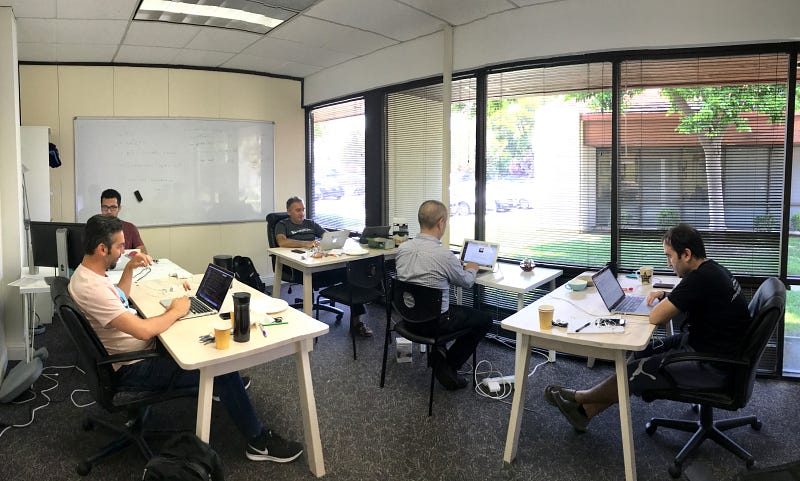
I'm happy to see people on this board looking at our service with suspicion, this is normal and the community needs to protect itself from scammers. We do show our own faces and linkedin profiles on the front page of our exchange. Yes, it is possible that people are just using the identities of others. We are obviously not so prominent or famous but I do have a number of fairly prominent people in crypto who could vouch for us or who have met us including general partners at Pantera Capital, Jackson Palmer, originator of Dogecoin, Robert CEO of ZenCash, Zooko from Zcash and many others. I know these aren't necessarily the gods of crypto like Vitalik Buterin, but I havent met him so he can't say if I'm a real person or not. I am one of the organizers of the SF Advanced Crypto Asset Trading group and Crypto Underground meetup, so 3500 people in that community know who I am at some level. Anyhow, I welcome the suspicion, I hate scammers as much as anyone and feel like everyone who asks you to "send bitcoin to this address" deserves to be checked out. I've been in Silicon Valley for 25 years working in tech.
Talip created the open source project Hazelcast. https://github.com/hazelcast/hazelcast a github based Apache open source licensed project with over 24,000 commits and 143 committers.
We need to get more reviews. it will take time to become a trusted and reliable member of this community, we get it. We will keep working hard to earn your trust.
Happy to answer any other questions you all may have.
How to start
As with any crypto service, start small. Just try a very small transaction to see how the system behaves. It's a fully functional system, so you'll immediately get the feeling of that. And yes, do your homework.
This is Talip@Evercoin. We will be adding more coins over time starting with Monero in a week. We think support matters a lot. We want to make sure we are quickly reachable via anonymous chat on the website when needed.


All jokes aside, I'm not knocking Evercoin. It looks beautiful and I welcome anyone and everyone who wants to bring liquidity to crypto markets. I'm just concerned about the sustainability of any platform based in the US. Maybe Evercoin knows something I don't though.
I feel like the smartest thing we can do is exactly what Bitfinex has done. Shut out US customers and put pressure on regulators to be sensible.